
By Sandhiya Srinivasan, Founder & Lead Artist · Updated
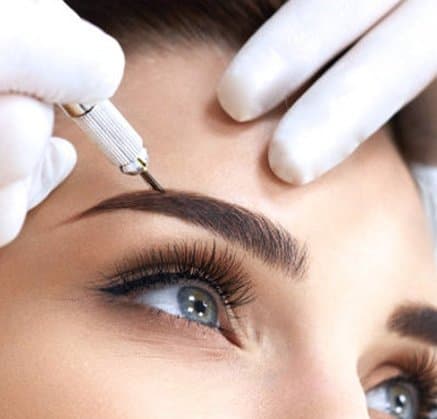
Sparse eyebrows are one of the most common reasons people come to us. Years of over-plucking or threading, gaps from scars, thinning with age, or brows that were always light and fine can all leave you filling them in every morning. Microblading adds fine, hair-like strokes into the gaps, so your brows look fuller without pencil. Here is how it works on sparse brows and when another technique is a better fit.
Why Eyebrows Become Sparse
- Over-plucking or threading: Hair that is removed repeatedly for years may grow back thinner or not at all.
- Scars: A small scar through the brow leaves a gap where hair does not grow.
- Age and hormones: Brows often thin toward the tail with age, after pregnancy or with thyroid changes.
- Naturally light or fine hair: Some brows are full but so fine or fair that they barely show.
- Medical hair loss: Conditions such as alopecia, or hair loss during medical treatment, can thin or remove brow hair. Check with your doctor first, and tell us at your consultation.
How Microblading Fills Sparse Brows
With a fine hand tool, we place pigment in thin strokes that follow the direction, length and angle of your own brow hair. Where you still have hair, the strokes sit between it and add density. Where there are gaps, the strokes rebuild the shape. Because each stroke looks like a single hair, the result reads as fuller natural brows rather than a drawn-on block of colour.
Your brows are measured and mapped to your face, then drawn on first. Nothing begins until you are happy with the shape, so you can see the fuller brow before any pigment goes in.
When Microblading Works Best
- You have some brow hair left and want it to look denser and more even.
- You prefer a natural, brushed-up look over a filled-in, made-up one.
- Your skin is normal to dry, so fine strokes heal crisp.
- You want to rebuild a missing tail or close small gaps and scars.
When Another Technique Suits Sparse Brows Better
Microblading is not always the right answer for thin brows. On oily skin or large pores, fine strokes can blur as they heal. If there is very little hair left, strokes alone can look flat, because there is no natural hair to blend them with.
- Combination brows: Strokes at the front with light shading behind. Good for very sparse brows that need fuller definition, and for combination to oily skin.
- Ombre powder brows: Soft shading with no fine lines. Best for oily skin, or if you usually fill your brows in with powder.
Our guide to microblading vs powder brows compares all three in more detail.
What Results to Expect
- First week: Brows look darker and sharper than the final result, then flake lightly.
- After healing: Skin needs about a month to heal fully. Strokes soften, and some can fade more than others, especially in very sparse or scarred areas.
- Touch-up: A touch-up any time between 30 and 90 days fills any strokes that faded and adjusts depth. Sparse brows often benefit from it most.
- How long it lasts: Typically 2–3 years, depending on skin type, sun and aftercare. A colour boost keeps it fresh.
Will My Own Brow Hair Be Affected?
No. Microblading works in the top layer of skin and does not stop your natural hair from growing. Many clients find they stop over-plucking once they no longer need to shape around gaps, which gives their own hair a chance to grow back.
Find Out What Suits Your Brows
Send a photo of your bare brows in natural light on WhatsApp. We look at how sparse they are, your skin type and your brow hair, and tell you honestly whether microblading, combination brows or powder brows will heal best for you before you book anything. Our studio is in New Perungalathur, Chennai, near Tambaram.